Niki swapped England for Galicia: «I teach English outdoors on the Costa da Morte. To know a language you have to live it»

VEN A GALICIA
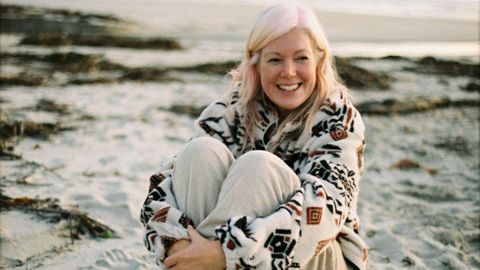
Seeking a way of life and to contribute to the local economy, Niki decided to take the plunge as an entrepreneur. And Galician was the key to doing so. «In Spanish I saw that the older people around here didn't understand me, which is why I wanted to make an effort and learn Galician», she reveals
22 sep 2026 . Actualizado a las 12:33 h.In the «deepest Galicia» live Niki and Sam, deeply convinced. The couple from the UK are settled in Quilmas, a place where they found the «paradise» they were looking for as parents of two girls and surf lovers. Niki Lurie (Poole, Dorset, 1980), a native of England's south coast, discovered Galicia in the summer of 2005: «I loved it! In October I arrived in A Coruña and started working as a teacher right away, and I stayed». In Galicia, this entrepreneur who teaches English out in nature moved further into the countryside—first Esteiro, then Carnota. And today she lives off the beaten track on the Costa da Morte with her husband, Sam, and their daughters, Leiki and Ayla, aged 9 and 10.
The couple met whilst working at an academy in Santiago. They were united by their roots and the waves. Because of surf «first we lived in Esteiro, in Muros, and when our eldest daughter was born things took a turn and we ended up in Quilmas», Niki says. It was an instant match. They found a house close to the beach, «very lovely». With the arrival of their second daughter, Niki stopped commuting daily from Carnota to Santiago for work and set up Sea Change Natural English. Sam built up his prestige and clients from all over the Peninsula as a wedding photographer with a «natural and timeless» style.
Seeking a way of life and to contribute to the local economy, Niki decided to take the plunge as an entrepreneur. And Galician was the key. She had always been interested in the language: «In Spanish I saw that the older people around here didn't understand me, which is why I wanted to make an effort and learn Galician. Galician is the language of my clients», says Niki, referring mainly to the classes she gives during the academic year. Through Galician, she connects with the people she teaches English to.
«Languages don't fight each other. Even less so if children start learning them naturally», Niki believes. «You have to absorb the language, live it on a daily basis, not just in an academic and instructional way», explains this speaker of English, Spanish and Galician who decided to make her dream a reality: «giving English classes outdoors, making the most of the resources, landscape and culture of the Costa da Morte».
The worst Galician, like the worst English, is the one that isn't spoken, she considers: «A language is alive. It is the people who speak it. It isn't a static thing, it's something in motion that is steeped in the people who speak it».