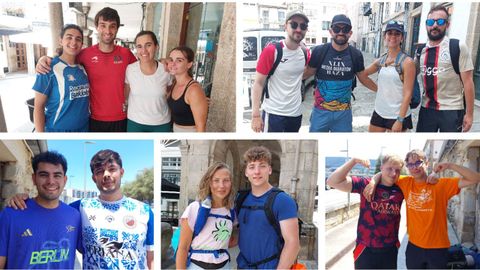
People of diverse ages, origins, and interests live side by side along the more than 110 kilometres from Ferrol to Santiago.
15 sep 2026 . Actualizado a las 12:18 h.In 2024, over 28,000 compostelas were awarded on the Camino Inglés, although it is estimated that 25 per cent of those walking this Jacobean route do not stamp this document. Several pilgrims from various Spanish cities and countries such as Ukraine, Italy, or Portugal share their experiences and motivations for completing an itinerary that has consistently gained followers since 2021.
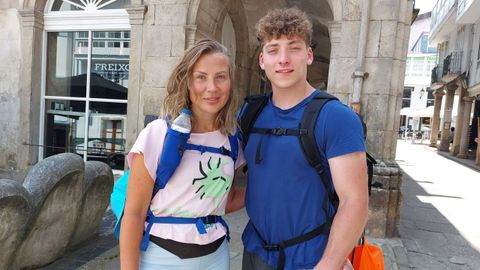
Julia and Matbiy, Ukraine: «You get to know the local culture and gastronomy»
Julia, a Ukrainian woman, loves the Camino de Santiago «for that mix of walking trail, forest, nature, weather, and history... the medieval churches». She has walked the French Route and the Portuguese Route, and in July she shared a journey along the English Route: «It is a time to be able to spend with my son [Matbiy]». Both are «fit and prepared for walking», and were planning to complete the itinerary in just four days. «It is my first time, but I'm ready», noted Matbiy after tasting an exquisite octopus in one of the establishments in Pontedeume's historic centre. His mother researched thoroughly before embarking on this adventure and arrived in Pontedeume determined to look for its squares and its most iconic buildings. «I love reading about the history of each area before getting there, learning about its origins, getting to know the culture and tradition of the place, and also the local food and wine, because the Camino is a gastronomic experience too», she stresses. They prefer staying «in the best establishments in each location». In Ferrol, they stayed at the Parador de Turismo, and in Pontedeume, at the Hotel A Falúa. One afternoon in July, mother and son were strolling together «through the beautiful streets» of Pontedeume.
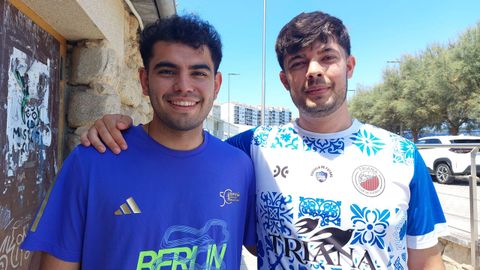
José y Antonio, Seville: «We thoroughly enjoyed the views»
Antonio discovered the Camino Inglés with his parents, and this summer he has «dragged» José along, a childhood friend from Seville, the hometown of both. «I had been wanting to do it for a while, but financially I couldn't, and now was the right time. We are meeting a lot of people,» José comments. On 19 July, they arrived in Ferrol and watched the World Cup final on the big screen in Plaza de España, «with a great atmosphere», and then went out partying. On Monday, they walked to the hostel in Neda, where they hit it off with «people from Valencia», with whom they ended up playing cards; and the following day, they set off at seven in the morning, heading for Pontedeume. The experience of the second stage turned out to be «tough», not because of the heat —«at night we put our hoodies on, we missed the feeling of cold»— even though the sun beat down, but «because of the slopes, there is a lot of elevation change». However, they «thoroughly enjoyed the views». They rose early and at 10.15 am, before the tourist office (which manages the municipal hostel) had opened, they were already crossing the Pedra bridge. Their plan was to head over to Plaza Real —«we've been told there are plenty of pubs»— and explore the monuments.
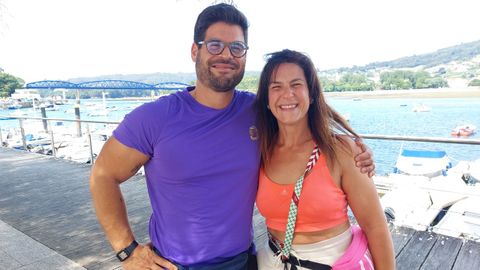
Bruno and Ana, Portugal: «It's a mental pause, you think about what's essential»
Bruno, a Portuguese man from Aveiro, has 14 Jacobean routes under his belt and shared his second Camino Inglés with Ana, a first-timer. «In 2019, I walked the Central Portuguese Way with a female colleague; the second was the English Route, which I did alone and met some very special people, and since then I haven't stopped», says Bruno, a retail store manager from Aveiro, in perfect Spanish. What moves him? «When you are walking, you are pausing mentally, you think about what is important, what's essential. Some people ask why you don't go on holiday to the beach instead. This is my beach», he replies. His travelling companion, a lawyer from Espinho, shares his reflection: «When I met Bruno, I wanted to have the experience. We set off from Ferrol today, it's turning out to be a break, a moment to pause». «I have made lifelong friends, from Argentina to Russia, you meet people who like the same things you do. Today we crossed paths with Fernando, a man from Valencia, and he was telling us that his wife doesn't understand it... there are things you just can't explain», adds Bruno, who confesses to being «more Galician than Portuguese» and a lover of northern Spain and Portugal. Mind you, he prefers October and April to the summer: «There are too many people».
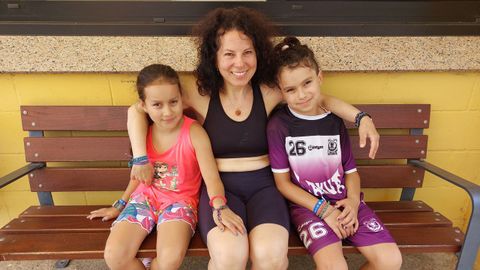
Priscilla, Italian, and her children, Tristán and Adele: «The experience with children is very intense»
Priscilla is Italian and lives in Victoria, and in July she set off to walk the Camino Inglés with her children, Tristán, aged 10, and Adele, aged 8. At Easter, they started walking in Logroño for five days, «to see how it worked out, to see if they could manage it». Test passed, they were ready to tackle the route from Ferrol to Santiago in the middle of July. Their mother decided to extend the stages and, instead of five, split it into seven. She had already reached Compostela several times, first in 2013, after walking the French Route, and in August 2025, after completing the Primitivo. She has also walked the Aragonese and the Basque Inland routes (both of which link up with the French Route). «I like walking alone, but with them it is a very different experience and a different way of sharing compared to being at home, it is a very intense experience, 24 hours a day, you talk a lot...», she explains. A supporter of staying overnight in public hostels, they spent the first night at the one in Neda and intended to sleep at the one in Pontedeume for their second. «It's my first choice, sharing hostels is part of the experience», she repeats. Wherever there are hobs, she takes the opportunity to cook.
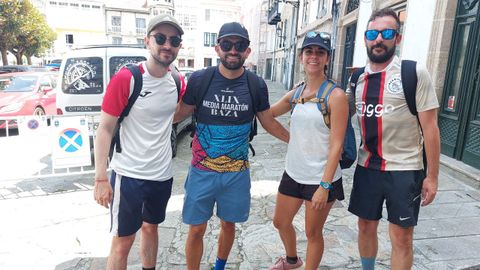
Ramón, Andrés, Helena, and Salvo, from Jaén, Córdoba, and Cádiz: «We combine sport and friendship»
Helena, from Córdoba, is on her third Camino, always within Galician territory, just like her companions; for Salvi, from Cádiz, it is his second, as it is for Andrés, from Jódar (Jaén), the same town as Ramón, who is making his debut. The group is completed by two other walkers from Huelva. «Our motivation is more social, you combine sport and friends, and you also get to know the cultural aspect», they agree. Salvi had already walked the French Route, starting from Sarria. Helena was fascinated by the woods and villages of the Primitivo Route —«it's the one I've liked most so far because you see rural life»— and she also walked the Vía de la Plata from Xinzo de Limia. She finished the first section of the English Route «tired, not because of the temperature, which was manageable thanks to the light breeze, but mostly because of the sun», right in the middle of a heatwave in the third week of July. In Pontedeume, they stayed at the O Cruceiro guesthouse, which they booked a month and a half in advance. They estimate that between the flight from Seville to Santiago, accommodation, and food, the Jacobean adventure will cost them between 600 and 800 euros per head. «It's a week's holiday», they chant in unison.
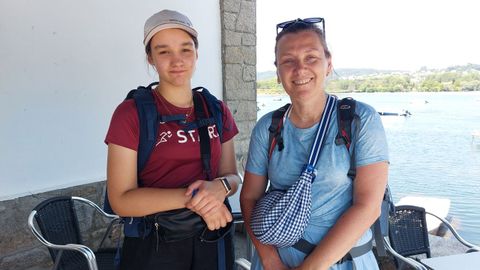
Kasia and Tosia, Poland: «We don't want to rush, it's very hot»
Kasia is Polish, but has been living in Scotland for two decades, and was encouraged to do the Camino Inglés to spend time with her niece, Tosia, who resides in Poland, just like the rest of the family. Kasia was already familiar with the pilgrimage adventure, first with the Primitivo Route, from Oviedo to Compostela, and later with the San Salvador Route, which links the cathedral of León with that of Oviedo. She explains that in 2025 she travelled to her home country and saw «the yellow arrows», and then thought of the possibility of undertaking a new route to Santiago, this time alongside Tosia. «I wanted to spend time with my niece», she explains. Tosia is motivated more by religious faith. «We are going slowly, it's very hot and we don't want to rush. I booked everything [hotels and guesthouses to stay in each town] in advance, for about seven days», Kasia commented just after arriving in Pontedeume, having had a dip at Cabanas beach. She confessed her desire to visit the monastery of Caaveiro and regretted the lack of a public transport service to the Fragas do Eume.
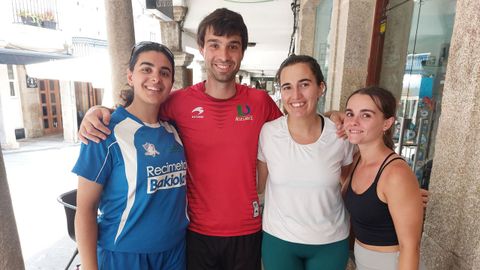
Iratxe, Ibaia, Patricia, and Laura, Bilbao: «You disconnect from your mobile and meet people»
Patricia convinced three friends who did not know each other to put on their trainers and walk the more than 110 kilometres of the Camino Inglés. She shared the route with Laura, Ibai, and Iratxe, all from Bilbao, like herself. «I prepared by going for a walk one day», laughs Patricia. The three women already knew a little of Galicia —Laura's father-in-law is from Arzúa—, but Ibai had never set foot in Galician territory. All four value this experience and agree on its meaning: «Walking, sport, nature, meeting people, and disconnecting from your mobile». Ibai insists that during the first day, from Ferrol to Pontedeume, he did not check his phone: «If something had happened in Bilbao, we wouldn't have known». They stopped for breakfast in Neda, stopped once more to get out of the sun and recharge their batteries, and sat down to eat at three in the afternoon at a restaurant in Pontedeume's old town, sheltered from the sun by the arcades. While waiting for their meals to be served, Patricia took the opportunity to stretch, pleased to have clocked up no fewer than «31,000 steps», according to her smartwatch. And plenty more to go before reaching the finish line.
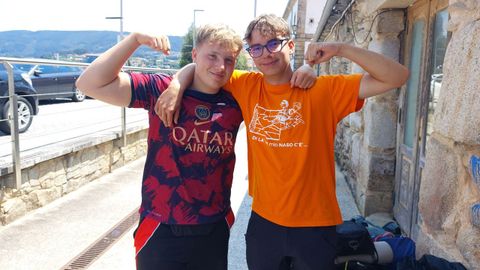
Samuele and Luca, Italy: «We really like walking, just for fun»
Samuele (who turned 18 on 8 August) and Luca, aged 19, are two of the 37 members of Al di là del mio naso c'è, a social promotion collective from Fara Gera d'Adda, an Italian municipality in the province of Bergamo, in the Lombardy region, who immersed themselves in the Camino Inglés this summer. From Ferrol to Santiago, and from there to Fisterra, where they planned to finish on 6 August. This group of young people, starting from 12 years of age, are accompanied by several leaders. Samuele had already made his debut as a walker at just 12 years old along the Via Francigena, the medieval pilgrimage route connecting Canterbury to Rome, covering the Italian section of 900 kilometres (from the Great St Bernard Pass in the Alps to St Peter's Square in the Vatican). «We really like walking... just for fun», pointed out both of them at the Pontedeume hostel (several had to stay elsewhere). To pay for this expedition, they worked hard throughout the year at the association, organising parties and selling sweets they baked themselves.
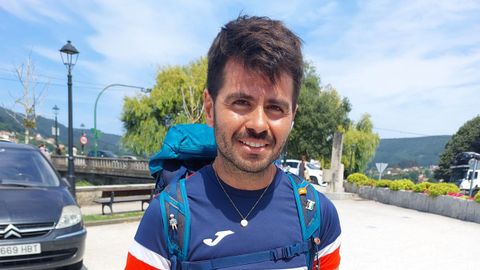
José Ramón, Cáceres: «I love the landscape»
José Ramón, a native of Cáceres, likes walking and discovering «territories different from Extremadura». «And escaping the heat we have back there», he emphasizes. At the start of the Camino Inglés, he found the best scenery. «I love it, it has been really enjoyable», he confessed just after crossing the Pedra bridge, as he was heading towards Pontedeume's municipal hostel. That was despite having walked 32.5 kilometres, quite a few more than usual: «I detoured several times, when passing near villages that the Camino doesn't go through, to see the chapels and the sacred art». In addition to the adventure on foot and the quest for cooler weather, José Ramón is driven by religious feeling.
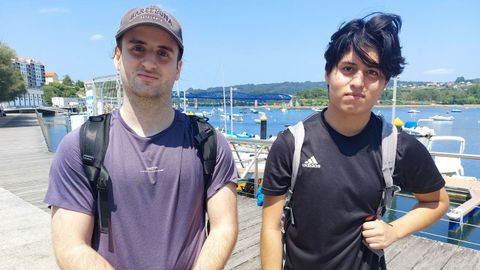
Pau and Fernando, Barcelona: «The experience is what matters»
Pau, a 21-year-old from Barcelona, got started with the Primitivo Route and this year encouraged his friend Fernando, 20, to cover the English Route in four days. «The experience is what matters to us and we like Galicia, everything is green and it's less hot», highlight these students.